
Habits, Part 1: Physical Energy
Why everything else depends on it

Every January, the same thing happens.
People set resolutions. They promise themselves this will be the year they get healthier, more focused, more present, more disciplined. Gym memberships spike. Calendars get color-coded. Motivation feels high.
And then, quietly, life pulls them back into old patterns.
The problem isn’t that resolutions are bad. It’s that resolutions don’t change lives on their own. Habits do.
Lasting change doesn’t come from a burst of motivation at the start of the year. It comes from small, repeatable decisions that sustain that motivation long after January fades. That’s why we’re starting this year at Bold Wealth with habits, not goals. And we’re starting with energy.
Because without energy, none of the other habits matter.
Where This Lesson Began
My dad lived with Multiple Sclerosis for most of his adult life. Some days the physical decline was more visible than others, but inside his body the experience was constant. He once described his energy as waking up every morning feeling like you have the flu.
Not for a week. Not for a season. Every day.
I watched what that kind of fatigue does to a person. How it limits choices. How it shortens patience. How even simple things require negotiation with your own body. Not because of a lack of willpower or discipline, but because the fuel just isn’t there.
That experience stayed with me.
My dad taught me many lessons directly, but this one came through observation. Energy is not optional. Without it, life gets smaller. Work feels heavier. Relationships take more effort. Joy becomes something you chase instead of something you experience.
It shaped me in a similar way my mom was shaped by her parents.
She grew up in a home where Italian was spoken first. Her parents wanted their kids to succeed, but they couldn’t help her with English. So she figured it out on her own. She became the first in her family to go to college, an English major no less.
She used to joke that when she wasn’t sure how something should be written, she’d think, What would my parents say? and then do the opposite.
Sometimes we learn by example. Sometimes we learn by contrast.
Both shaped how I think about energy.
What Energy Changes
When you’re younger, energy feels endless. You don’t think about protecting it. You assume it will always be there.
As responsibility grows, that illusion disappears.
Energy determines how patient you are with your kids. How present you are with your spouse. How clearly you think at work. How resilient you are when things get hard. You can have money in the bank, opportunities waiting, and people counting on you, but without energy, none of it works the way it should.
That’s why energy isn’t just a health issue. It’s a life issue.
Energy shapes your choices. And your choices shape your life.
What Has Made the Biggest Difference
Over time, I’ve learned that energy isn’t something you find. It’s something you build.
Not through extremes or hacks, but through a few steady practices that quietly compound in the background of your life. What works for me today looks very different than what worked at twenty-five, and I’m sure it will look different again ten years from now. That’s important to say up front.
The point isn’t copying someone else’s routine. The point is being intentional about your own.
That said, a few patterns have consistently made the biggest difference for me.
I think of them as the Big Three of energy: sleep, movement, and food.
Not because they’re trendy. Because everything else depends on them.
Sleep came first.
Not perfect sleep, but protected sleep. I’ve learned that when sleep slips, everything else follows with it. Mood. Patience. Focus. Decision-making.
For me, that means about seven and a half hours a night. I go to bed around the same time most evenings, usually around 9:30, and wake up around 5:00. Not because that schedule is “right,” but because it works for my body and my life. Consistency matters more than precision.
I wind down intentionally before bed, usually with reading or something that slows my mind down. The goal isn’t productivity. It’s transition. When my head hits the pillow, I want my mind already moving in the direction of rest.
I’m also careful with caffeine. I rarely drink it, and when I do, it’s tea and never later than midday. I’ve learned that protecting sleep quality matters far more than squeezing out a little extra energy late in the day.
I don’t treat sleep as laziness anymore. I treat it as preparation.
Movement came next.
Not heroic workouts or extreme routines. Just daily movement.
I don’t move because I’m chasing fitness goals. I move because my body and brain work better when I do. Energy follows motion, not the other way around. When I stay still too long, everything slows. When I move, momentum returns.
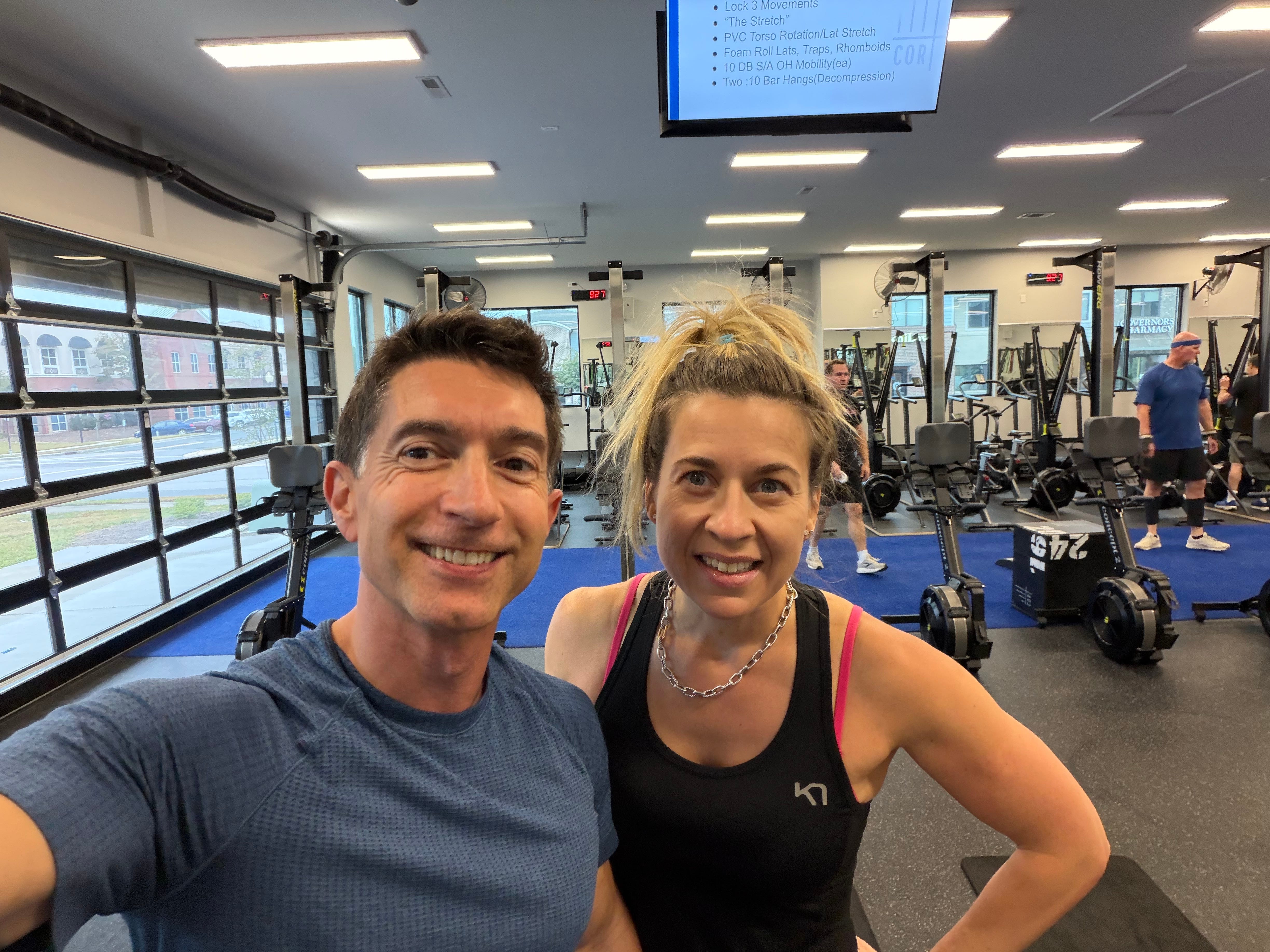
For me, that looks like a HIIT-style group fitness class every weekday morning at 6 a.m. I’ve learned through experience that when I skip it, I almost always crash after lunch. When I move early, my energy carries me through the entire day. I’m sharper, more efficient, and more patient with the people around me.
That doesn’t mean this is the formula. Walking. Lifting. Stretching. Rowing. Any form of movement that reminds your body it’s alive counts. The goal isn’t intensity. It’s consistency.
And it’s not only the big habits that matter. The small choices layer on top of each other too. Standing instead of sitting at your desk. Parking a little farther away. Taking the stairs instead of the elevator. Choosing movement in the margins of your day instead of convenience.
After my workout and before I go about my day, I take a shower. The final sixty seconds are cold water only. I don’t enjoy it. But it wakes my body up, sharpens my focus, and flips the switch from groggy to ready. Sixty seconds of discomfort buys me hours of better energy. It’s a far better pick-me-up than an energy drink.
None of these habits feel significant on their own. But together, they add up. They keep your body engaged, your energy circulating, and your momentum moving forward.
Small habits like these don’t demand willpower. They simply require awareness.
Food became fuel.
Food didn’t become fuel overnight. For a long time, it was just food.
When I was younger, I could eat anything. Pasta, bread, juice, french fries. Nothing slowed me down. Energy felt endless, so I never questioned what I put into my body. If I was hungry, I ate. If I was tired, I pushed through.
That worked. Until it didn’t.
As the years went on, the crashes became harder to ignore. Midday slumps. Foggy afternoons. A short fuse when my energy dipped. I didn’t change anything at first. I just assumed that was part of getting older or being busy.
Eventually, patterns become obvious if you’re willing to notice them.
Carb heavy meals, especially on an empty stomach, were the biggest culprit for me. Big spikes, followed by bigger crashes. When my energy dropped, everything else suffered. Focus. Patience. Presence. The things I care most about were the first to go.
So I adjusted.
I still enjoy good meals, but I pay attention now. Not in a rigid or obsessive way. Just an honest one. Clean, simple food keeps me steadier and more focused. This isn’t about discipline or virtue. It’s about effectiveness. When my energy works, everything else works better.
Sugar was the easiest place to start.
I grew up on Sprite. These days, the clear beverage of choice is water. Nothing fancy. Just fewer spikes and fewer crashes.
Small habit. Massive downstream impact.
Alcohol was another decision that became clearer with time. I used to drink socially, usually on a Friday or Saturday night. But those next mornings mattered more than I wanted to admit. Those are the mornings when my boys wake up at sunrise, ready to go, expecting their dad to be fully there. I realized I wasn’t my best self the morning after even one or two drinks.
I work hard so I can have that time with my kids. That’s the whole point. So when I saw the tradeoff clearly, the decision became easy. I stopped drinking altogether, and I haven’t missed it. Not because alcohol is bad, but because energy is precious, and I want to spend it where it matters most.
When I was younger, I could eat almost anything and get away with it. That season passed quietly, as it does for everyone. Now, I feel the effects of food almost immediately. Clean food gives me clarity and stamina. Sugar and processed carbs give me a short spike followed by a long crash. I still enjoy treats, but I’ve learned to pause and ask a simple question: is this worth how I’ll feel an hour from now?
None of this is about perfection. It’s about direction. Small choices, repeated daily, compound into how you feel most of the time.
That’s the same idea I wrote about in Compounding in Money and Life. Tiny actions, done consistently, create outsized results. The math doesn’t change just because we’re talking about energy instead of dollars.
Small choices, made consistently, change how you show up everywhere else. And once energy improves, everything downstream gets easier. Focus sharpens. Patience expands. Work feels lighter. Presence becomes more natural.
Momentum is powerful. It can work against you, or it can work for you. Great sleep, consistent movement, and eating for energy create momentum you can feel. But it always starts the same way. With small, daily choices, made on purpose.
Habits Compound, Just Like Money
This is where habits and wealth intersect.
Just like money, habits compound. Small daily deposits may not feel dramatic, but over time they create outsized returns. A slightly earlier bedtime. A short walk. One better food choice. These aren’t life-altering on their own.
But stacked over months and years, they change your capacity.
Most people set New Year’s resolutions and hope motivation carries them. The people who create lasting change focus on habits instead. They build systems that sustain progress long after motivation fades.
That’s how real change sticks.
What This Makes Possible
When energy improves, everything else gets easier.
You’re more patient. More present. More resilient. You have the margin to think instead of just react. You start making better decisions, not because you’re forcing yourself to, but because you finally have the capacity to.
Energy doesn’t guarantee a great life, but without it, even a good one feels hard to enjoy.
This is why we’re starting here.
Because habits around planning, mindset, money, and relationships all depend on the foundation of energy. Get this right, and everything else becomes more accessible.
Your Turn + Start Bold
This week, don’t try to change everything.
Choose one small adjustment that gives you more energy for the life you want to live. Maybe it’s protecting your sleep by fifteen minutes. Maybe it’s adding ten minutes of movement to your morning. Maybe it’s removing one habit that drains you more than it serves you.
Try one thing. Notice how it feels.
Awareness comes before momentum. Progress equals happiness.
What’s your one thing as you start the year? If you want, share it here.
Looking Ahead
Next week, we’ll build on this foundation by talking about how you plan your days. Not productivity for productivity’s sake, but how intention directs the energy you’re working so hard to build.
Energy is the fuel. Planning is the steering wheel.
Why We Build Wealth
At BOLD Wealth, we believe habits are the true compounding engine of life.
Energy habits. Time habits. Money habits. Relationship habits.
Money is not the goal. It’s a tool. We build financial wealth to create freedom. Freedom to live aligned with our values. Freedom to be present with the people we love. Freedom to build a life that feels rich in meaning, not just numbers.
That’s the real payoff. That’s what it means to minor in money and major in life.
New to BOLD Wealth?
Here’s a simple Blueprint to BOLD Wealth that explains the philosophy, the core frameworks, and how money fits into a life that actually feels rich.
A Favor - will you consider clicking the 💚 on this email?
Clicking the little heart icon at the bottom or leaving a comment helps these posts to reach more people (and also makes my day!). If you liked what you read, consider clicking the heart or leaving a comment. Thank you so much in advance!
Well said! Sleep used to be an afterthought, now mine is intentional and consistent. Eat, sleep, move, it's that simple.
I’m the same with workouts- if I don’t get it done first thing, by noon I’m cranky. Trying to leave my phone out of the bedroom is my 2026 goal!