
The Simple Formula for Getting Rich
Almost everyone knows it. Almost no one actually does it.

People ask me this question all the time: “How did you get rich?”
Sometimes it’s high school students. Sometimes it’s adults who feel like they’re already behind. You might be wondering the same thing today.
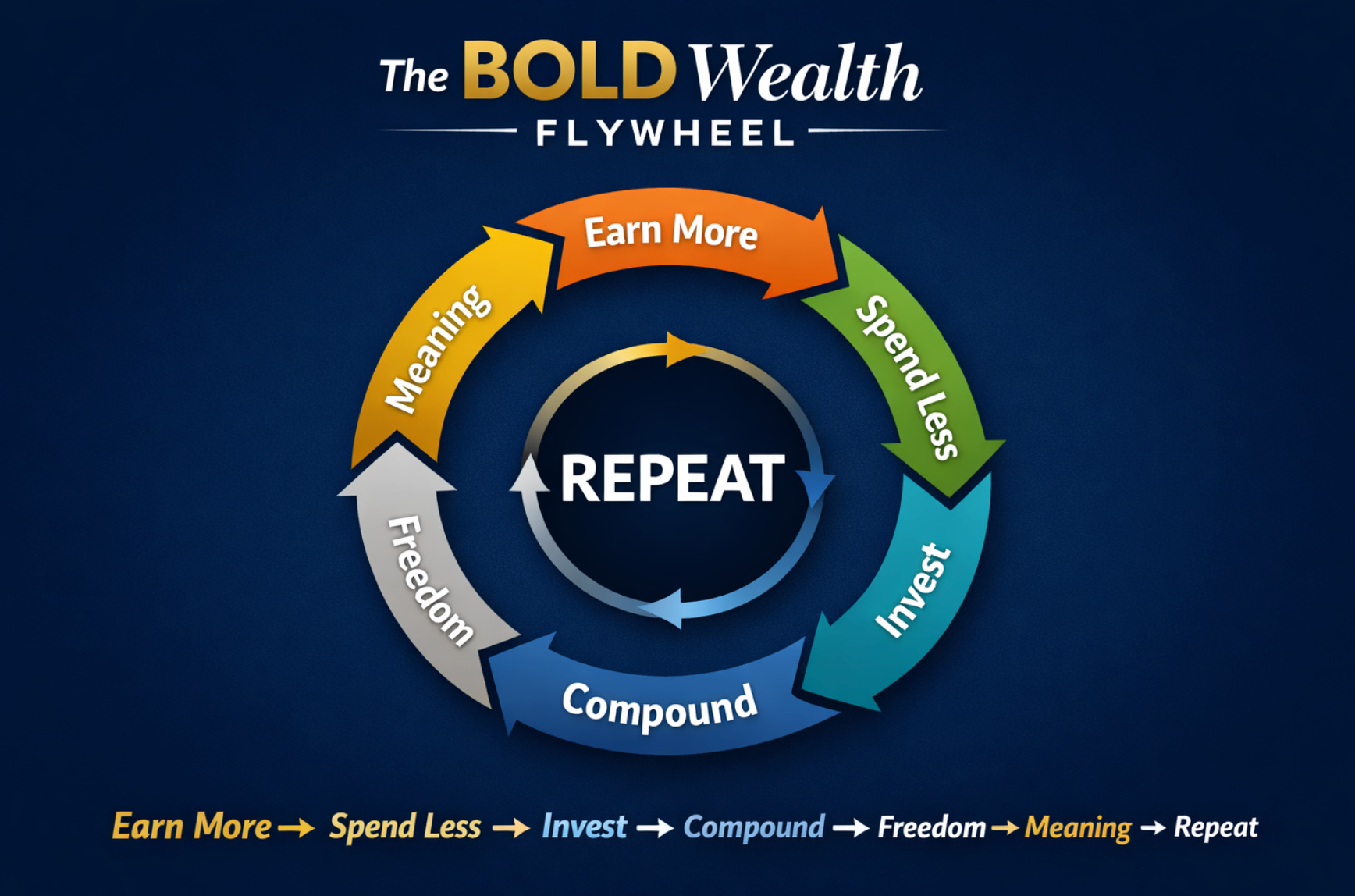
The truth is, the formula for getting financially rich is not complicated:
Earn more.
Spend less.
Invest the rest.
Strip away the hot stock tips, the complicated strategies, the online gurus, and the noise. Wealth almost always comes down to a few simple habits practiced consistently over a long period of time.
Earn more.
Spend less.
Invest the rest.
Repeat.
The Advantage Most People Ignore
When I speak to high school students, I tell them they already have the single most valuable asset in wealth building: time (read about Time as your Most Valuable Asset here).
Most adults underestimate how powerful time really is. If you start saving and investing early, compounding quietly does extraordinary work in the background. Small, consistent decisions today can turn into enormous results decades later.
But most people don’t take advantage of that. Instead, income rises and spending rises with it. Lifestyle expands, savings disappear, and years pass.
Two Paths I’ve Watched Play Out
Early in my career, I worked as a mortgage broker. That job gave me a front-row seat to people’s financial lives, and what I saw surprised me.
I met doctors, executives, and business owners earning very high incomes who had almost nothing saved. From the outside, they looked wealthy. Behind the scenes, many were living paycheck to paycheck because their spending had simply risen to match their income.
At the same time, I saw people on the opposite path.
They started saving early.
They invested consistently.
They lived slightly below their means.
Twenty years later, their investments had quietly turned into large nest eggs that produced income of their own.
Those people have something different. They have freedom.
The difference between the two groups usually came down to one habit practiced over a long period of time: financial discipline. The financially wealthy consistently spent less than they earned and invested the difference. Then they let time and compounding do the heavy lifting (read about the Power of Compounding here).
And here’s something most people don’t like to hear: most people don’t actually have a money problem; they have a discipline problem. I’ve seen people making $60,000 build real wealth. And I’ve seen people making $600,000 stay broke.
Income helps. But habits decide the outcome.
My Own Path
I started the same way.
When I began working, I didn’t make much money. But I built the habit early of saving and investing as much as I could.
At 23, I built my first home.
At 25, I bought my first investment property.
From there, the pattern stayed the same:
Earn.
Save.
Invest.
Repeat.
Over decades, that simple pattern compounded into tens of millions of dollars in real estate, producing hundreds of thousands of dollars in annual income.
But none of that happened quickly. It happened slowly, quietly, through consistent discipline over a long period of time.
But Money Alone Isn’t Wealth
Some people read this and assume the goal is simply to accumulate the biggest possible pile of money to be happy. That misses the point.
I’ve met people with massive bank accounts who feel completely empty. Money alone does not create happiness. Real wealth is living a life aligned with your values. That’s why the formula doesn’t stop with investing.
Earn more.
Spend less.
Invest the rest.
Then make your money matter.
The formula I was following wasn’t just teaching me how to build money; it was teaching me how to build a life.
And that’s when the bigger idea became clear.
Money Compounds. Meaning Compounds.
Money compounds when you invest consistently, and meaning also compounds when you invest in relationships, experiences, growth, and generosity.
Too many people fall into one of two traps.
Some focus only on accumulating money. They delay life indefinitely and wake up decades later with a large pile of assets, but very little life lived.
Others ignore money entirely. They tell themselves money doesn’t matter while financial stress quietly limits their choices.
Neither path leads to a rich life. The better path is building both. Financial wealth gives you freedom; meaning gives your life purpose.
And when those two compound together, life gets very interesting.
Why This Matters to Me
My perspective on this started early. My dad was diagnosed with Multiple Sclerosis when he was forty years old. I was ten.
Watching someone you love lose their physical abilities at such a young age changes how you think about time. It reminds you that the future we assume we have is not guaranteed.
When I turned forty myself, that realization hit me hard. Forty was the age when my dad’s decline began. That became a personal reminder for me. I didn’t want decline. I wanted growth.
I wanted to build businesses.
Travel the world.
Create memories with my family.
Experience everything life has to offer.
Not someday. Now.
Money makes more of that possible. But only if you use it intentionally.
Build a Life, Not Just a Balance Sheet
At the end of your life, no one gathers to read your balance sheet; they gather to remember how you made them feel. That’s why we build wealth. Not for status. Not for scorekeeping. But to fuel the areas of life that matter most:
Family
Health
Growth
Generosity
Joy
That’s what I call BOLD Wealth.
A life that’s rich in both money and meaning.
Your Turn
Take a moment and ask yourself two simple questions:
Are you consistently spending less than you earn?
And are you investing the difference?
If the answer is yes, keep going. If the answer is no, the solution is simpler than you think. Start creating a gap between what you earn and what you spend, then invest that gap consistently over time. Small decisions repeated for years can completely change your financial future.
I’m curious. Which part of the formula do you think is hardest for most people?
Earn more
Spend less
or
Invest the rest
I’d love to know what you think.
New to BOLD Wealth?
Here’s a simple Blueprint to BOLD Wealth that explains the philosophy, the core frameworks, and how money fits into a life that actually feels rich.
A Favor
If this post resonated, would you consider clicking the 💚 or leaving a comment? It helps these ideas reach more people, and I’m grateful you’re here.
Spending less. There's often a gap between our comfort zones and financial discipline. I'm reading Uncluttered Faith by Joshua Becker right now, and he has a quote that stuck with me about this: "Maybe the life you’ve always wanted is buried under everything you own!"
This is so good. I think people underestimate how hard the ‘invest the rest’ part is—fear and overthinking stop so many people from even starting.
The idea that both money and meaning compound really stood out to me. That’s the balance people miss.